Analog Scan Displacement Portrait from Photo Prompt
Copy directly or customize parameters with the tool below.
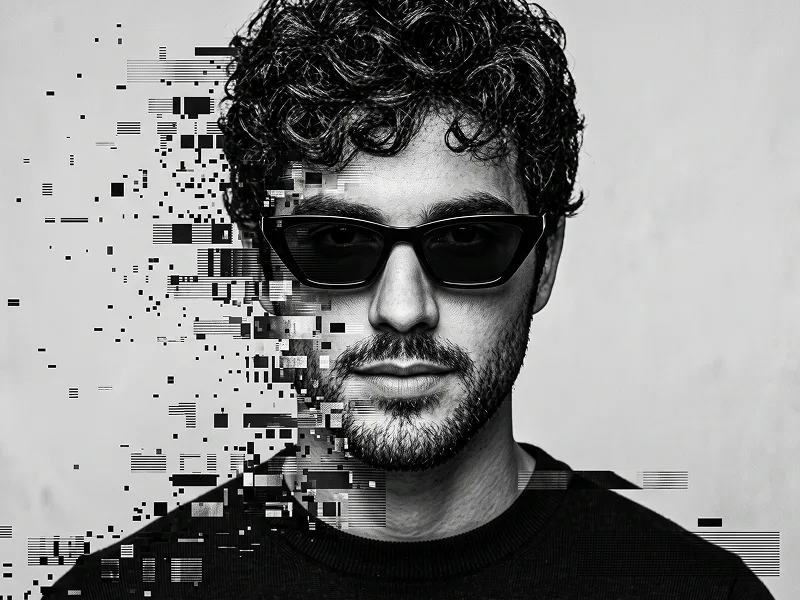
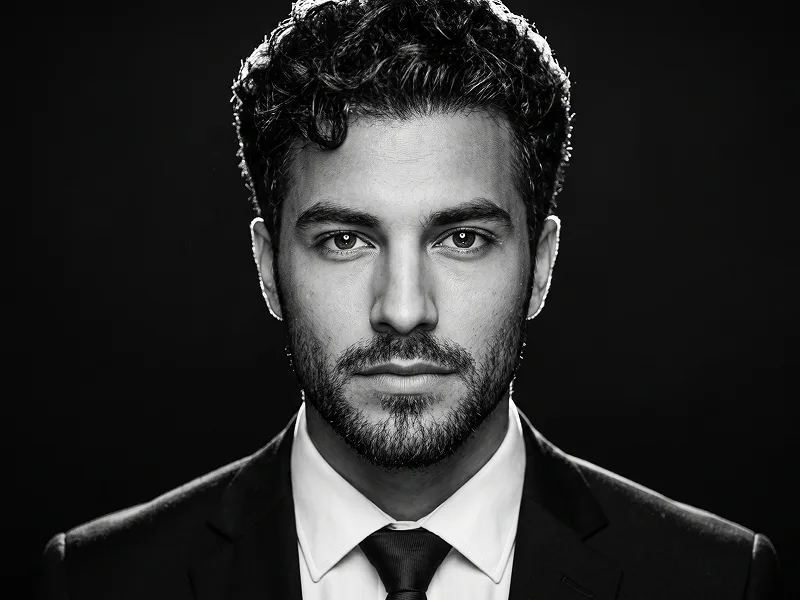
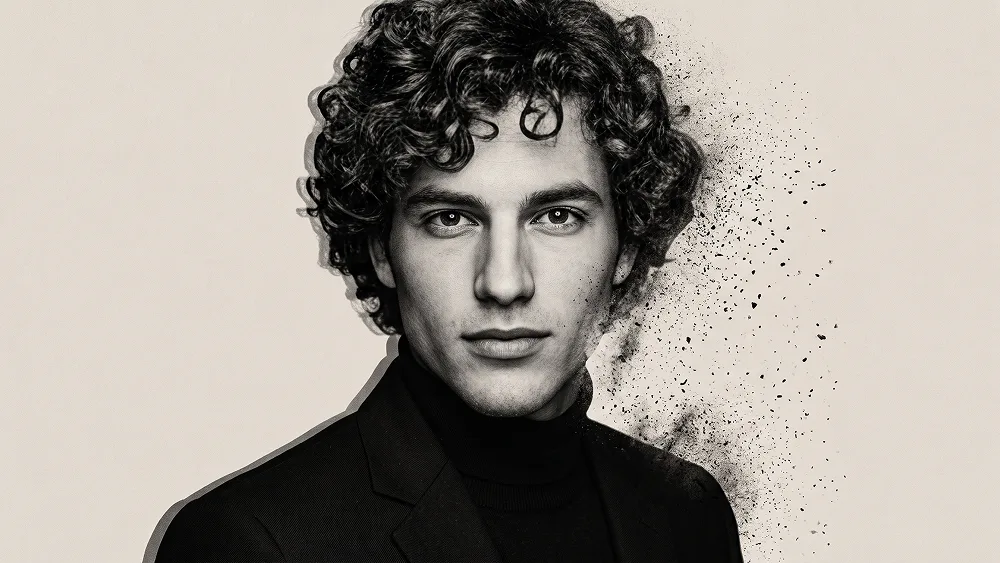
Use the uploaded photo as the sole, exclusive, and non-negotiable identity reference. Preserve the subject’s exact real appearance with maximum possible fidelity, including face shape, forehead, jawline, cheekbones, chin, eyes, eyelids, eyebrows, nose, lips, ears, skin texture, hairstyle, hairline, hair texture, facial hair if present, natural asymmetries, and every distinctive feature. The final portrait must unmistakably depict the exact same person. Do not beautify, reshape, age, smooth, or replace the identity with a generic model. Create a premium black-and-white editorial portrait built around a controlled analog scan-displacement effect rather than conventional digital glitching. Show the subject in a tight chest-up composition with the body angled subtly away from the camera while the head turns back toward the lens. Keep the expression calm, self-assured, and slightly distant, with strong eye contact and a refined fashion-editorial presence. Dress the subject in a minimalist structured black jacket over a clean dark high-neck or crew-neck top. Keep accessories extremely restrained so the face and visual treatment remain dominant. Preserve the subject’s real hairstyle and facial hair exactly as provided in the uploaded image. Keep the central face exceptionally sharp and recognizable, then introduce several narrow horizontal sections where the photographic image appears mechanically shifted sideways, as though a physical scanner briefly lost alignment while capturing the portrait. Selected strips crossing the hair, cheek, neck, and shoulder should slide a short distance in alternating directions, leaving subtle duplicated edges and fractured tonal trails. Do not distort the entire face; the eyes, nose, lips, and core facial structure must remain intact and immediately identifiable. Along one outer edge of the head and shoulder, gradually transition the solid portrait into a refined dry-pigment erosion effect. Let tiny charcoal-like particles, microscopic ink flecks, and fine monochrome dust lift away from the silhouette into the surrounding negative space. The decay should begin densely at the edge and progressively become more sparse until individual particles disappear into the background. Keep the effect tactile, sophisticated, and physically believable rather than resembling random Photoshop noise. Use only black, graphite, charcoal, silver-gray, and soft off-white tones. Place the subject against a pale warm-gray background with subtle fine-paper texture and generous empty space. Maintain the refined visual standard associated with prompteg.com through controlled experimentation, elegant negative space, and premium editorial art direction; this reference is creative guidance only and must never appear visually in the generated image. Illuminate the subject with a large directional studio source from one side, producing clean sculptural facial modeling, restrained highlights, detailed shadows, and subtle separation from the pale background. Preserve realistic pores, individual hair strands, beard or stubble detail if present, authentic fabric texture, delicate analog grain, and smooth tonal roll-off. The final image should feel like a luxury fashion photograph physically damaged during an experimental analog printing process: minimal, intelligent, dark, tactile, contemporary, and instantly scroll-stopping. Avoid colorful glitch effects, heavy pixelation, full-face distortion, duplicated people, chaotic fragmentation, cyberpunk aesthetics, cartoon rendering, artificial skin smoothing, distorted anatomy, or cluttered backgrounds. Do not include any visible text, typography, logo, watermark, signature, website address, or branding anywhere in the generated image.
Customize variables & parameters in real time.
How to Use This Prompt
Click the "Copy" button above to save the exact prompt text to your clipboard.
Launch Gemini or your preferred AI image generator interface.
Paste the prompt into the input bar, add optional aspect ratio parameters (e.g. --ar 16:9), and generate.