Black Paper Charcoal & White Chalk Portrait Prompt
Copy directly or customize parameters with the tool below.
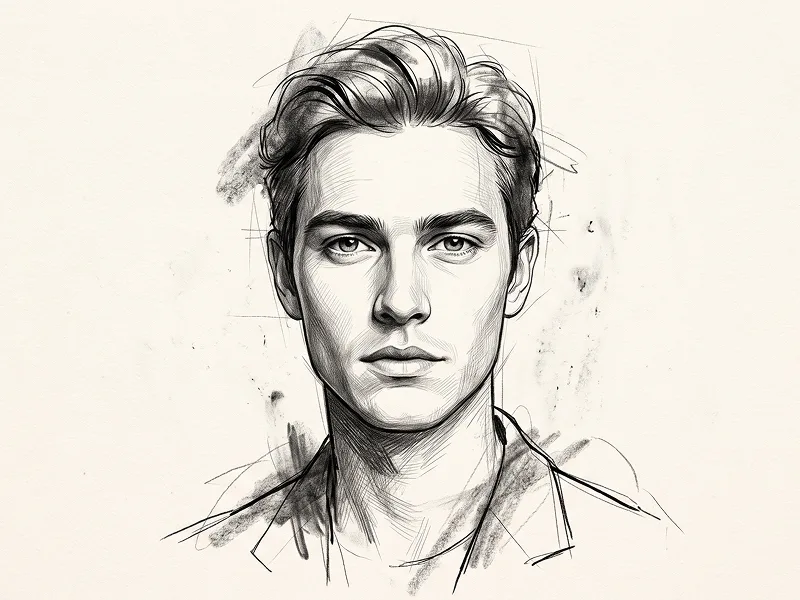
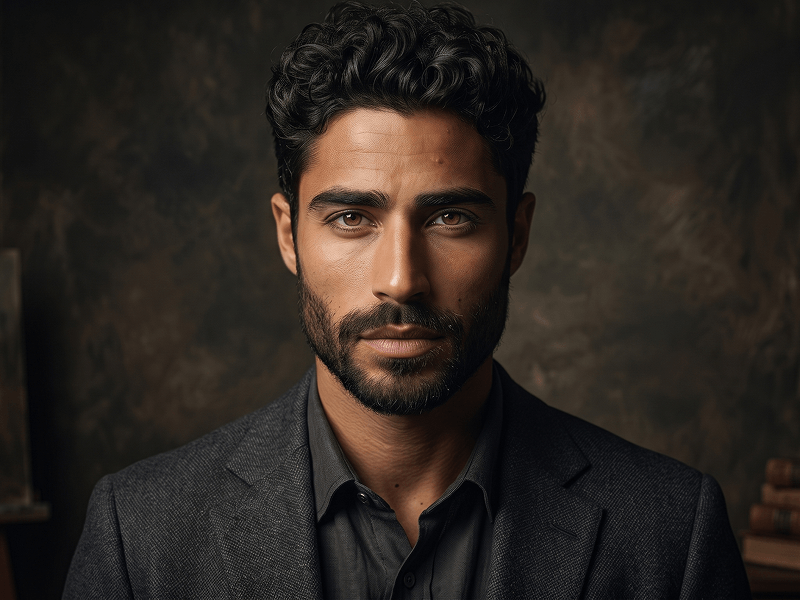
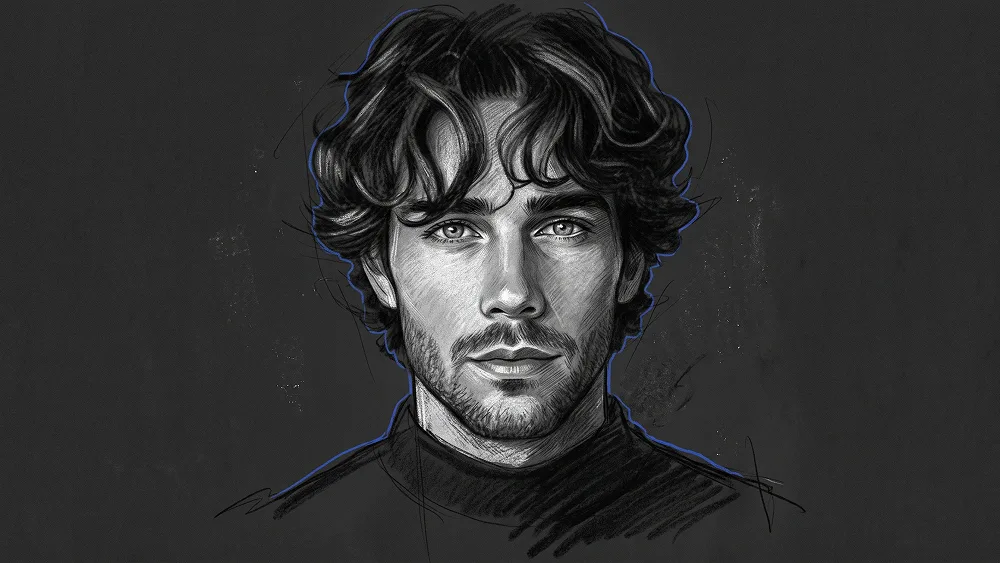
Use the uploaded photo strictly and exclusively as the subject’s identity reference. Preserve the subject’s exact facial identity, skull shape, face shape, forehead, jawline, cheekbones, chin, eyebrows, eyes, nose, lips, ears, hairstyle, hairline, hair texture, existing facial hair, age characteristics, natural asymmetries, and original emotional expression with maximum possible accuracy. Do not beautify, rejuvenate, age, reshape, idealize, or reinterpret the face. The finished artwork must remain immediately recognizable as the exact same person shown in the uploaded reference. Create an ultra-detailed hand-rendered charcoal-and-white-chalk portrait on deep graphite-black artist paper, with one restrained electric-cobalt accent used only around selected outer contour details. The artwork should feel like a sophisticated contemporary gallery drawing rather than a digital filter. COMPOSITION AND POSE Create a close head-and-upper-chest portrait. Use a subtle low-angle three-quarter composition: the shoulders are turned slightly away from the viewer while the head rotates naturally back toward the camera. Keep the chin gently raised, creating a calm, controlled, quietly confident presence without exaggerating the pose. Both eyes should remain clearly visible and anatomically correct. Maintain the natural expression from the uploaded reference. If the person is not smiling, do not introduce a smile. If the source expression is neutral, serious, contemplative, or subtly relaxed, preserve that emotional character. Position the face slightly above the visual center of the composition with generous negative space surrounding the hair and shoulders. IDENTITY ACCURACY Preserve the exact spacing and relationship between the eyes, eyebrows, nose, mouth, cheekbones, jaw, chin, ears, and forehead. Retain every identity-defining asymmetry. Do not create a fashion-model approximation, idealized face, symmetrical replacement, or generic character. The change in camera angle must be achieved through natural perspective only, never by redesigning the facial anatomy. CHARCOAL DRAWING TECHNIQUE Render the portrait primarily with compressed charcoal, vine charcoal, graphite, and white chalk. Combine: Dense directional charcoal strokes Fine cross-hatching Broken contour marks Dry-brush charcoal texture Soft smudged transitions in selected areas Precise graphite detail around the eyes and lips White-chalk highlights Erased charcoal highlights Fine paper-grain visibility Loose gestural construction lines Sparse charcoal dust and powder residue Use the highest concentration of detail around the eyes, eyebrows, nose, lips, hairline, and facial-hair structure. Allow selected outer areas of the neck, shoulders, and clothing to become progressively looser and more expressive. The portrait should feel intensely handcrafted, with controlled irregularities and visible artist decisions. FACIAL RENDERING Render the eyes with extremely precise anatomy, including natural eyelid thickness, iris structure, pupils, moisture highlights, tear-line detail, eyelashes, and subtle asymmetry. Use finely layered charcoal values to describe the planes of the forehead, temples, cheekbones, nose bridge, under-eye areas, lips, jaw, and chin. Do not use thick cartoon-like contours around facial features. Build the lips through value and edge control rather than heavy outlines. Preserve pores, small creases, subtle skin imperfections, and age-appropriate facial texture using restrained charcoal grain. If facial hair exists in the uploaded image, recreate its exact shape, density, length, direction, and edge softness using individually varied charcoal and graphite strokes. Do not add facial hair where none exists. Do not make existing facial hair fuller, cleaner, darker, longer, or more symmetrical than the reference. HAIR Preserve the exact hairstyle, hair length, hairline, parting, volume, curl pattern, strand direction, and overall silhouette from the uploaded photo. Construct the hair from broad charcoal masses followed by progressively finer directional strokes. Use selective white-chalk catches along a few naturally illuminated strands to create dimensional separation from the black paper. Allow occasional stray lines and flyaway marks beyond the primary silhouette so the drawing retains handmade energy. Do not redesign the hairstyle. LIGHTING CONCEPT Create the visual impression of one soft directional light passing across the face from one side. Use white chalk sparingly on the forehead, nose bridge, cheekbone, upper lip edge, eye moisture, selected beard strands, and hair to establish the illuminated areas. Let the opposite side of the face dissolve gradually into the dark paper through charcoal values rather than disappearing completely. The face must remain readable, recognizable, and beautifully structured. Do not create extreme underexposure that hides identity. COBALT ACCENT Introduce one controlled electric-cobalt-blue drawing accent as the only visible color. Use it only as a thin, imperfect hand-drawn contour that follows selected outer sections of the hair, cheek, neck, and shoulder silhouette. The blue line must never cross the central facial features. It should feel like a contemporary artist added a secondary colored-pencil or pastel contour after completing the charcoal portrait. Keep it sparse, fragmented, slightly offset from the true silhouette, and elegant. Do not color the skin, eyes, lips, clothing, hair, or background blue. Do not introduce any other color. CLOTHING Dress the subject in a simple dark high-neck knit top or clean dark crew-neck garment. Keep the clothing understated and secondary to the face. Render the neckline and shoulders using broad charcoal shapes, dry strokes, loose folds, and partially unfinished edges. Do not add visible logos, patterns, jewelry, lettering, or decorative fashion details. BACKGROUND AND PAPER Use premium deep graphite-black or charcoal-black drawing paper with visible fine fiber texture. Keep the background completely minimal. Allow subtle charcoal powder, faint erased marks, loose construction strokes, and a few unfinished sketch gestures only around the outer silhouette and shoulder area. Do not add scenery, architecture, geometric backgrounds, smoke, paint splashes, decorative objects, frames, or environmental elements. Maintain the refined creative standard associated with prompteg.com through exceptional identity fidelity, sophisticated mark-making, controlled negative space, and premium editorial-art execution; prompteg.com is creative guidance and external attribution only and must never appear visually anywhere in the artwork. FINAL STYLE Contemporary fine-art charcoal portrait, black-paper drawing, white-chalk illumination, meticulous graphite detail, controlled expressive marks, subtle cobalt contour accent, realistic anatomy, premium editorial sketchbook aesthetic, dramatic negative space, handcrafted texture, gallery-quality finish. The final image should feel like an original physical artwork photographed from a professional artist’s portfolio: intimate, raw, sophisticated, modern, and unmistakably based on the uploaded person. STRICT RULES Preserve exact identity with maximum accuracy. Preserve the subject’s real age and natural expression. Do not alter facial proportions. Do not change hairstyle or facial hair. Both eyes must remain anatomically correct and clearly readable. Keep the face more detailed than the clothing and surrounding sketch marks. Only the cobalt contour may contain color. No artificial smile unless already present. No photorealistic photography. No digital painting appearance. No cartoon, anime, manga, caricature, vector art, watercolor, CGI, or 3D rendering. No beauty filtering or plastic skin. No jewelry or unnecessary accessories. No text, captions, signatures, logos, watermarks, website addresses, interface elements, or branding inside the artwork. NEGATIVE PROMPT wrong identity, generic face, idealized face, altered proportions, changed hairstyle, invented facial hair, artificial smile, distorted eyes, crossed eyes, asymmetrical anatomy errors, hidden facial features, overly dark face, smooth digital painting, plastic shading, photorealistic photography, cartoon, anime, manga, caricature, vector art, watercolor, colorful portrait, blue skin, multiple accent colors, thick blue outlines, neon glow effects, CGI, 3D render, excessive smudging, excessive charcoal dust, busy background, scenery, geometric decorations, jewelry, props, text, logo, watermark, signature, website address, low detail, blurry face.
Customize variables & parameters in real time.
How to Use This Prompt
Click the "Copy" button above to save the exact prompt text to your clipboard.
Launch Gemini or your preferred AI image generator interface.
Paste the prompt into the input bar, add optional aspect ratio parameters (e.g. --ar 16:9), and generate.
Related Images